From the Nurse’s Office:

Get ready for “From the Nurse’s Office!” Our mini-series will provide important health advice and wellness tips for students, based on the PA Department of Health’s latest guidelines.

Important Safety Notice for Parents: Recall of Yaomiao Children’s Jewelry Sets

Dear Parents,

The Consumer Product Safety Commission has announced a recall of three Yaomiao-branded children’s jewelry sets due to safety concerns. These jewelry sets, sold exclusively online on Amazon from January 2022 through March 2024, contain harmful levels of lead and cadmium. The recalled jewelry sets, which feature unicorns, butterflies, hearts, turtles, stars, and rainbows, were sold in lavender boxes with the message “A Special Gift for the Charming You” printed on them.

Key Information:

  • The jewelry sets were sold for $8 to $21 and contain lead levels that exceed federal safety standards, as well as cadmium levels that are prohibited in children’s products.
  • Affected jewelry sets were packaged in small plastic bags inside a lavender box, with “Yaomiao” appearing on the box’s plastic wrap.
  • These products were sold exclusively on Amazon.com.

What to Do:

  • Immediately stop using the recalled jewelry and remove it from children.
  • Contact LordRoads for a full refund. You will be asked to dispose of the jewelry and send a photo of the disposed items to simlordroadple@163.com.
  • Amazon and LordRoads are directly contacting known purchasers.

Health Considerations:

  • The jewelry contains dangerous levels of lead and cadmium, which can pose serious health risks, especially to children. We recommend considering a lead exposure test for your child if they have used this product.

For more details, please visit the Consumer Product Safety Commission’s website or check out Lead (pa.gov) for more information on childhood lead exposure. If you have any questions, you can contact the Pennsylvania Department of Health at 1-877-PA-HEALTH.

We urge you to take immediate action and ensure your child’s safety.

Thank you – LVA’s Nurse’s Office

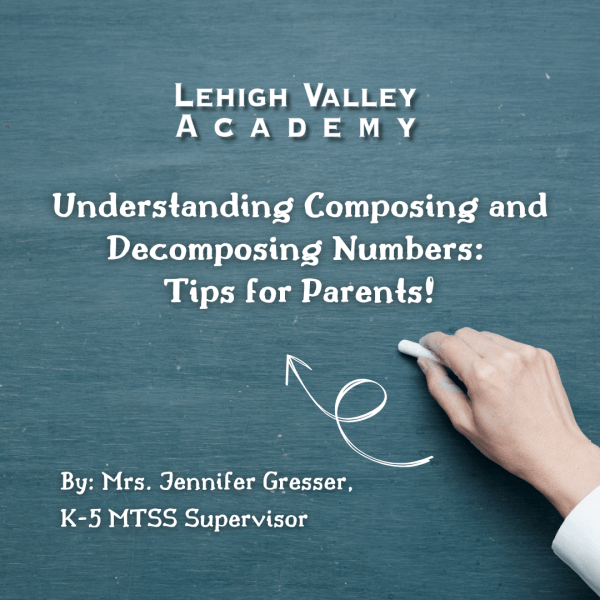
Understanding Composing and Decomposing Numbers: Tips for Parents

Composing and decomposing numbers is a fundamental concept in early numeracy. These skills help children understand how numbers are made up of smaller parts and how they can be broken down, which is essential for addition, subtraction, and developing a deeper understanding of number relationships.

The Importance of Composing and Decomposing Numbers

Understanding how numbers can be put together and taken apart helps children develop flexibility with numbers. It also builds a strong foundation for more advanced math concepts, such as addition, subtraction, and even algebra later on. By practicing these skills in fun, hands-on ways, you’re helping your child build a strong number sense that will benefit them throughout their academic journey.

Composing Numbers

Composing numbers is the process of combining smaller numbers to make a larger number. This skill lays the groundwork for addition. For example, knowing that 3 and 2 together make 5 helps children visualize how numbers work together.

Activities to Practice Composing:

  1. Using Objects: Gather small items like blocks, beads, or coins. Ask your child to combine different groups of objects to reach a certain number. For example, give then 3 red blocks and 2 blue blocks, and show how, together, they make 5. Then ask them to try other combinations, like 4 and 1 or 5 and 0.
  1. 5-Frame and 10-Frame: Use a 5-frame or a 10-frame to visually represent composing numbers. For instance, fill 4 spaces on a 5-frame and ask your child how many more are needed to make 5. Repeat this with different numbers using the 10-frame, asking your child to combine different sets of objects to make numbers up to 10.
  1. Story Problems: Create simple story problems where your child has to add parts to make a whole. For example, “There are 3 apples in the basket, and I added 2 more. How many apples are there now?”

Decomposing Numbers

Decomposing numbers is the reverse process-breaking a number into its smaller parts. This concept is foundational for subtraction and understanding number bonds.


Activities to Practice Decomposing:

  1. Breaking Apart Objects: Start with a group of objects, like 5 blocks, and ask your child to divide them into two groups. For example, if they split the 5 blocks into 3 and 2, help them see how 5 is made of those two parts. Ask them to try different combinations, like 4 and 1 or 5 and 0.
  2. Using a 10-Frame: Fill all 10 boxes on a 10-frame and ask your child to remove a certain number of objects. For example, remove 3 and ask them how many are left. This helps them visually see how a number like 10 can be decomposed into 7 and 3, or 5 and 5.
  1. Number Bond Cards: Use number bond cards that show a number with lines branching off to its parts. For example, a card with 8 at the top can have 5 and 3 connected below it. Ask your child to think of different ways to break down numbers like 6, 8, or 10.

Mrs. Jennifer Gresser, K-5 MTSS Supervisor

Helping Your Child Become a Fluent Reader: Tips for Parents

Reading fluency is the ability to read smoothly and accurately, with appropriate expression and comprehension. As a parent, you play a crucial role in helping your child build the skills needed to become a fluent reader. Whether your child is in kindergarten or fifth grade, there are simple, engaging activities you can do at home to support their reading development.

  1. Letter Naming and Sounds (Kindergarten and First Grade): For young readers, recognizing letters and understanding their corresponding sounds is the foundation of reading. Play letter games l;ike matching letters to objects or singing alphabet songs. Practicing letter sounds through phonics activities, such as blending sounds together to form words, will help your child begin to decode and read more confidently.
  1. Build Vocabulary:Vocabulary is critical for reading comprehension. Encourage your child to explore new words by reading books together, pointing out unfamiliar words, and discussing their meanings. Engage them in conversations that introduce new vocabulary. You can even make word walls at home where your child adds new words they learn each week.
  1. Practice Reading Fluency: Reading Fluency is developed through consistent practice. Reading aloud with your child can help build their confidence and fluency. Try “echo reading,” where you read a sentence, and your child repeats it. Repeated reading of favorite books also strengthens their ability to read smoothly.
  1. Enhance Comprehension: Understanding what they read is just as important as reading itself. After reading, ask questions about the story-who, what, where, when, and why. Encourage your child to make predictions or connect the story to their own experiences.

By focusing on these areas-letter recognition, sounds, vocabulary, fluency, and comprehension-you can help your child become a fluent, confident reader. Supporting their growth through fun, interactive activities will make reading a positive, enjoyable experience.

Mrs. Jennifer Gresser, K-5 MTSS Supervisor

Early Numeracy Tips for Parents: Fun Activities to Boost Math Skills

  1. Number Naming: Help your child become familiar with numbers by incorporating number naming into daily activities. Count objects around the house, like toys, snacks, or steps. You can also create number flashcards and ask your child to anime the numbers, or play a number scavenger hunt where they find numbers in books, on signs, or around the home.
  1. 5-Frame and 10-Frame Activities: A 5-frame or 10-frame is a simple visual tool that helps children understand number relationships. Draw or print a 5-frame (a grid with 5 boxes) or a 10-frame (a grid with 10 boxes) and use small objects like buttons, beads, or cereal pieces. Ask your child to fill the frame with objects, the practice counting how many are in the frame and how many are empty. This helps with number recognition and understanding quantities.
  1. Composing and Decomposing Numbers: Composing is combining numbers to make a larger number, and decomposing is breaking a number into small parts. For example, with a 10-frame, you can ask your child to fill 6 boxes, then figure out how many more they need to make 10. Practice using two sets of objects, such as 2 red blocks and 3 blue blocks, to show how they make 5 together. Ask questions like, “What two numbers can we add to make 7?”

These activities can make math fun and interactive, helping your child develop early numeracy skills that will serve as a foundation for more complex math concepts.

Reading Strategies for Kindergarten and First Graders: Tips for Parents

Helping your child build strong reading skills at home is a great way to set them up for success in school. Early reading skills are crucial because they lay the foundation for future learning. Mastering skills like letter naming and letter sounds helps children decode words, build vocabulary, and become confident readers. The stronger these early skills are, the easier it is for children to tackle more complex reading tasks as they grow. By practicing these activities regularly, you can help your child master essential early reading skills, setting them up for long-term reading success.

Here are a few fun, engaging activities you can do together at home:

  1. Letter Naming Scavenger Hunt: Write letters on index cards and hide them around the house. Ask your child to find each card and name the letter out loud. You can make it even more exciting by timing them and giving small rewards when they find all the letters!
  1. Alphabet Soup: Fill a bowl with magnetic letters and have your child “stir” the soup with a spoon. As they pull out each letter, ask them to name it. This simple activity combines play with learning, making it perfect for young readers.
  1. Letter Sound Hopscotch: Draw a hopscotch grid outside with chalk, filling each square with a letter. As your child hops, they must say the letter’s sound. This blends movement and learning, helping reinforce both letter recognition and phonics.
  2. Sound Sorting Game: Gather objects around the house that start with different letter sounds. Help your child sort them by the first sound they hear. For example, a sock and a spoon would go in the “S” pile.

What are some other reading games and activities that you like to do together?

Mrs. Jennifer Gresser, K-5 MTSS Supervisor

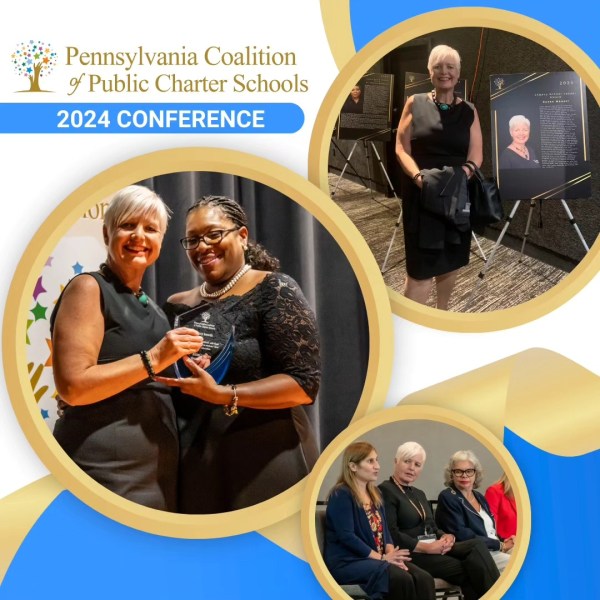
Celebrating Excellence in Leadership: CEO Susan Mauser Receives Legacy Leaders Award at PCPCS 2024

This past week, LVA’s very own CEO, Susan Mauser, was honored with the prestigious Legacy Leaders award at the Pennsylvania Coalition of Charter Schools (PCPCS) 2024 Conference. Held annually, this event gathers educators, administrators, and thought leaders from across the state to explore innovative strategies, share best practices, and engage in meaningful discussions about the future of charter schools in Pennsylvania.

The Legacy Leaders award recognizes individuals who have made a lasting impact on education and demonstrated an unwavering commitment to advancing charter schools. Susan Mauser’s dedication to fostering excellence at LVA has not only shaped the school’s success but has also contributed significantly to the broader charter school movement.

The PCPCS conference is a pivotal event, offering educators the opportunity to collaborate, learn, and grow together. With sessions designed to inspire and equip attendees with cutting-edge insights, it’s no wonder that the energy and passion surrounding charter school education continues to thrive. Attendees left with fresh ideas and renewed enthusiasm for transforming education.

We are incredibly fortunate to have such visionary leadership at LVA. Susan’s passion, dedication, and forward-thinking approach are helping shape the future of our students and educators. Her recognition with this award is a reflection of her relentless pursuit of educational excellence and her belief in the power of charter schools to create meaningful change.

Congratulations to Susan Mauser on this well-deserved honor!

Maximizing Student Success at LVA with MTSS: A Holistic Approach

The Multi-Tiered System of Support (MTSS) is a comprehensive framework designed to address students’ academic and behavioral needs through tiered interventions. MTSS emphasizes a proactive approach by delivering targeted support at different levels of intensity, ensuring every student can thrive.

At the core of MTSS are Tier 1 interventions, which provide high-quality instruction in both academics and behavior to all students. This foundational level aims to prevent difficulties by using best practices in math, reading, and behavior management. However, some students may require additional help beyond this universal support.

For those needing more focused instruction, Tier 2 interventions come into play. These students receive small-group instruction in areas like math and reading interventions, as well as targeted behavior interventions. Specialists in these fields, such as math, reading, and behavior specialists collaborate with teachers to design and deliver these supports.

When students continue to struggle despite Tier 1 and Tier 2 interventions, they may receive Tier 3 interventions. These highly individualized, intensive supports are provided through one on one or smaller group instruction by specialists in math, reading, and behavior. Additionally, Tier 3 students attend a morning work session where they receive targeted support using ST Math and Lexia Reading programs. Tier 3 ensures that students with significant learning or behavioral challenges receive the specialized attention they need to succeed.

By using data-driven decision-making, MTSS helps identify and respond to students’ unique needs, ensuring every learner has the opportunity to reach their full potential. The combined efforts of specialists and educators are key to achieving these outcomes.

Mrs. Jennifer Gresser, K-5 MTSS Supervisor

Celebrating Leadership Excellence: 

Susan Mauser Receives 2024 Legendary School Leader Award

We are thrilled to announce that Susan Mauser, CEO of Lehigh Valley Academy RCS, has been recognized as the Legendary School Leader of 2024 by the Pennsylvania Coalition of Public Charter Schools (PCPCS). This prestigious honor acknowledges Susan’s exceptional leadership, dedication, and the lasting impact she has made on our school community.  

Under Susan’s visionary guidance, Lehigh Valley Academy has continued to thrive, providing students with a nurturing and dynamic educational environment. Her endless commitment to academic excellence, innovation, and the well-being of our students and staff has truly shaped the future of our school. As a leader, she embodies the values of dedication, resilience, and integrity, inspiring everyone around her to strive for greatness.

The 2024 Legacy Award, bestowed by PCPCS, highlights Susan’s remarkable contributions to the world of education. Her leadership has not only transformed our school but has also set a high standard across the public charter school system. The Pennsylvania Coalition of Public Charter Schools noted:

Congratulations to our 2024 PCPCS Legacy Award Recipients! We are thrilled to celebrate your outstanding achievements and unwavering commitment to excellence in education. Your dedication and impact on the community have left a lasting legacy, and we are honored to recognize your contributions.

As we celebrate this incredible milestone, we look forward to the bright future ahead, knowing that Susan’s passion, leadership, and commitment will continue to inspire students, faculty, and families for years to come. 

Congratulations once again! Your leadership has made an indelible mark on our school, and we are so grateful for the vision and heart you bring to everything you do.

Let’s all take a moment to applaud Susan Mauser for this well-deserved recognition!

 LVA Middle Schoolers Are Making History – A Journey to National Competition

What started as an in-depth history project has turned into passionate presentations, accolades, and government recognition for two Lehigh Valley Academy 6th graders who decided to take on the challenge of the National History Day competition. National History Day is a nonprofit organization that hosts an annual project-based contest for students in middle school and high school. The goal of NHD is to inspire students to study history, conduct meaningful research, and make connections to their own lives and the times in which they live.

During a regional competition in April against other local middle schools, LVA’s own Sudha Chandrasekaran and Aryash Shyam presented an incredibly impactful project: “How America Changed After the Great Depression”. This project wowed the judges and it was selected to advance to the next level of the history competition at Scranton University!

From After School Meetings to State Champions

A few weeks later, Sudha and Aryash prepared to present their project to an even larger bracket at the state competition. Middle school teams from across the Keystone State competed in various categories, but Aryash and Sudha’s project again proved to be the most impressive in the group presenter category. This incredible win means they’ll be representing Pennsylvania at the National Competition held this June.

Not only did our students win first place, but they also received the special honor of showcasing their exhibit at the Smithsonian’s National Museum of American History in Washington, D.C., during the week of the national competition. These two have worked incredibly hard and we’re so proud to see them advance through each round!

With the National competition a few weeks away, the excitement continues to build. On April 30, Sudha and Aryash received their official certificates for First Place in the state competition Junior Group Exhibit, stamped and signed by Senator Boscola herself!

Governor Shapiro also sent our students a personal letter of encouragement, sharing that:

“our Commonwealth is shaped and strengthened by the character and prowess of our younger generation. The First Lady and I hope that you take the time to reflect on your achievements, and we wish you the best of luck and continued success as you move on to compete on the national stage.”

On Saturday, May 18th, a certificate of congressional recognition was awarded to Aryash by congresswoman Susan Wild during an event for new outstanding Military Academy Candidates; Aryash was invited to give the pledge of allegiance during the ceremony. 

Principal Raeford, and all of us here at LVA, are thrilled by the dedication and success of our young learners. Both Sudha and Aryash have been an inspiration, and we cannot wait to hear more about the rest of their journey to Nationals in June.

LVA Tops the Charts for Local and National High Schools

Lehigh Valley Academy has achieved remarkable success in the latest U.S. News 2024 High School Ranking Report! Here are the highlights:

  • LVA is proudly ranked #1 in the Allentown Metro Area and #26 among 740 Pennsylvania public high schools.
  • Nationally, LVA stands at #175 out of 3,022 charter schools and #986 out of 17,655 schools.
  • These rankings are based on various factors including college readiness, curriculum breadth, state assessment performance, and graduation rates.
  • LVA excels in areas like college readiness and state assessment proficiency.

College readiness is particularly important as it prepares students for success beyond high school. It’s not just about academic knowledge but also about developing critical thinking, problem-solving, and communication skills necessary for higher education and the workforce.

Congratulations to everyone at LVA for this outstanding achievement! While we’re proud of our standing, we consider ourselves a work in progress and look forward to making improvements year after year. It’s only through the collaboration and hard work of our staff and partnerships with parents and community organizations that Lehigh Valley Academy can support student achievement. We want our legacy to live on through our students’ abilities to achieve their goals.

You can learn more about LVA’s profile in the U.S. News Report here.