Building English Language Skills at Home

Making English a regular part of home life creates opportunities for practice, connection, and learning, enhancing both individual and family growth. Incorporating English into daily routines can be an enjoyable and effective way to build language skills at home.

Incorporating English into daily routines at home is important for several reasons:

  1. Language Acquisition: Regular exposure to English helps improve vocabulary, grammar, and pronunciation. It aids in natural language acquisition, allowing learners to develop their skills in context.
  2. Enhanced Communication Skills: Engaging with English daily promotes better speaking, listening, reading, and writing skills. It encourages family members to express themselves more effectively.
  3. Confidence Building: Using English in familiar settings can help reduce anxiety and build confidence. This is especially important for learners who may feel intimidated in formal learning environments.
  4. Cultural Integration: English is a global language, and incorporating it into daily life helps individuals connect with diverse cultures, media, and ideas, enhancing cultural awareness and appreciation.
  5. Educational Support: For children, integrating English into home routines reinforces what they learn in school and helps them keep up with their studies, particularly in subjects where English is the medium of instruction.
  6. Problem-Solving Skills: Discussing everyday situations in English encourages critical thinking and problem-solving by requiring individuals to articulate their thoughts and ideas clearly.
  7. Fostering Creativity: Utilizing English in creative activities, such as storytelling, writing, or arts and crafts, can stimulate imagination and expression.
  8. Social Opportunities: Daily use of English can help families engage with their community, participate in social events, and build relationships with English-speaking friends and neighbors.
  9. Family Bonding: Incorporating English through shared activities like reading books, watching movies, or playing games can create bonding experiences and foster a love for learning.
  10. Lifelong Learning: Establishing English as a part of daily life encourages a mindset of continuous learning, which is valuable in an increasingly interconnected world.

Here are some practical tips to integrate English into your daily activities:

Morning Routine

  • Morning Affirmations: Start your day with positive affirmations or goals stated in English, such as “Today, I will learn something new.”
  • Label Items: Use sticky notes to label common household items in English (e.g., refrigerator, door, chair) to reinforce vocabulary.

Meal Times

  • Cooking Together: Involve family members in cooking using English recipes. Discuss ingredients and cooking terms.
  • Dining Conversations: Encourage everyone to speak in English during meals.

Learning Through Play

  • Games: Play games that require English skills, such as Scrabble, Pictionary, or word search puzzles.
  • Story time: Read books aloud together in English, discussing the story and characters afterward.

Media Consumption

  • English Media: Watch English-language movies, TV shows, or YouTube channels. Discuss plots, characters, and reactions afterward.
  • Music: Listen to English songs, focusing on the lyrics. You can encourage family members to sing along or discuss the song’s meaning.

Daily Activities

  • Shopping List: Create your grocery shopping list in English and practice pronunciation of items while shopping.
  • Daily Journal: Encourage keeping a daily journal in English where family members can write their thoughts or describe their day.

Outdoor Activities

  • Nature Walks: Go on nature walks and talk about the things you see in English. Use descriptive language and new vocabulary.
  • Community Events: Attend local events or groups that conduct activities in English to engage with others.

Technology Integration

  • Language Apps: Use language-learning apps like Duolingo, Babbel, or Rosetta Stone as a fun, interactive way to practice.
  • Social Media: Follow English-speaking content creators on social media platforms for informal language exposure.

Creative Activities

  • Arts and Crafts: Engage in arts and crafts while discussing steps and materials in English. Describe what you are creating.
  • Drama and Role Play: Encourage family members to act out scenes from English books or movies. This can be educational and entertaining.

Establish Language Strengthening Rituals

  • Family Meetings: Hold weekly family meetings conducted entirely in English to discuss upcoming plans, family updates, and any issues.
  • Weekly Vocabulary: Introduce a new word every week. Use it in different contexts throughout the week.

Evening Routine

  • Bedtime Stories: End the day with a bedtime story in English, using both reading and discussion to reinforce language usage.
  • Reflection: Reflect on the day using English. Discuss what was learned and what could be improved.

Bonus Tips!

  • Patience and Encouragement: Create a supportive environment to encourage every family member to speak English, regardless of their proficiency level.
  • Consistency: Make it a habit; consistent exposure will gradually improve language skills over time.

By incorporating these practical tips into your daily routines, you can create a rich English-speaking environment. This environment fosters learning and makes language practice fun for everyone involved.

Primary Years Programme (PYP)

Play is much more than just fun; it is the foundation for unlocking a child’s full potential to learn, grow, and thrive. In the PYP Early Years program, designed specifically for children aged 3 to 6, play becomes a powerful tool for discovery and development. This approach allows children to explore their natural curiosity, express their creativity, and build the confidence needed to navigate the world around them.

Serious About Play, Serious About Growth:

Through guided and open-ended play, children in the PYP Early Years program are encouraged to ask questions, solve problems, and collaborate with peers in ways that nurture critical thinking and social skills.

This dynamic and engaging environment not only supports cognitive development but also fosters emotional resilience, adaptability, and a lifelong love of learning.

By embracing play as an essential part of the educational journey, the PYP Early Years program equips children with the curiosity to explore, the creativity to innovate, and the confidence to succeed—not just in their early childhood years, but throughout their lives.

The PYP early years offers a holistic learning experience that integrates socio-emotional, physical, and cognitive development, where:

Exploration Through Play:
Learners engage with their environment and discover their world through play, forming meaningful connections with peers, teachers, family, and community members.

Teachers as Partners:
Teachers act as partners, nurturers, and guides, facilitating the exploration of children’s interests. They support learning through both long-term and short-term projects, fostering a love for discovery and growth.

Dynamic Learning Environments:
Schools create vibrant, dynamic spaces that cultivate curiosity, encourage creativity, and build the confidence children need to thrive.

“We really feel that introducing the IB PYP early years has enriched our school. It is at the heart of everything—from the learner profile and inquiry- led learning to agency, transdisciplinary approaches and so much more.” — Jennifer Sait, Head of School, Kai Early Years, India

The PYP Early Years framework is grounded in research and thoughtfully designed to empower children with choices, fostering a sense of ownership over their learning journey. This program nurtures creativity and curiosity in young learners by:

  • Providing an Engaging Preschool Curriculum: Offer a stimulating and developmentally appropriate curriculum. These critical early years are when young brains are primed to absorb. They can benefit from enriching experiences.
  • Recognizing Individual Growth: Acknowledging that young learners are intelligent, resourceful, and creative individuals. They grow, develop, and learn at their own pace.
  • Prioritizing Play as Inquiry: We utilize play as the primary means for exploration and inquiry. This approach allows children to learn naturally through discovery.
  • Encouraging Learner Agency: Empowering children to take an active role in constructing their own learning experiences. This approach fosters independence. It also enhances critical thinking.

Research conducted in Singapore and Australia highlights the effectiveness of the PYP Early Years program:

  • Literacy skills among participating children were well-developed.
  • In terms of school readiness, children performed at levels comparable to or exceeding a normative sample.
  • Young learners demonstrated higher rates of skill development compared to a comparative sample.

Equip your children with the skills they need for tomorrow while meeting the expectations of today’s discerning parents. The PYP Early Years framework now offers standalone preschools a new pricing structure, tailored to support their curriculum planning needs.

Benefits for Students:

Students at International Baccalaureate® (IB) World Schools experience a distinctive, rigorous, and globally-minded education.

IB Learners are:

  • Empowered to think critically and tackle complex challenges.
  • Actively engaged in driving their own educational journey.
  • Participants in programs that prepare them for admission to some of the world’s top-ranking universities.
  • Enhanced in cultural awareness through the acquisition of a second language.
  • Equipped to connect and collaborate in an increasingly globalized and fast-evolving world.

IB Students Often Perform Better:

IB students develop a robust set of academic, social, and emotional skills that help them excel both in and out of the classroom. The program fosters critical thinking, resilience, collaboration, and self-awareness, shaping students into well-rounded individuals. Additionally, IB students tend to perform exceptionally well academically, often surpassing their peers in other educational systems. The program’s rigorous approach attributes to this success. It challenges students to engage deeply with their studies. Students develop the skills necessary for lifelong learning and achievement.

Wrapping It All Up: Why PYP Early Years Matters

The PYP Early Years program is more than an educational framework. It is a transformative journey. This journey empowers children to learn through curiosity, creativity, and play. This program integrates socio-emotional, physical, and cognitive development. It creates a dynamic learning experience. As a result, it lays a strong foundation for lifelong success.

Young learners develop critical skills through meaningful exploration. Nurturing teacher partnerships and vibrant learning environments also contribute. These skills prepare them for the challenges of tomorrow. Research underscores the program’s effectiveness in fostering school readiness, literacy, and skill development. It gives students an edge academically, socially, and emotionally.

Parents can relax, knowing their children are part of a globally recognized program. This program encourages independence. It fosters critical thinking and promotes cultural awareness. These skills are essential for thriving in an interconnected world. With the PYP Early Years framework, we’re not just preparing children for school; we’re preparing them for life.

Invest in a future of limitless potential. The PYP Early Years program turns the wonder of play into the power of learning. It shapes young minds to become confident, compassionate, and capable global citizens.

A Closer Look at IB’s Core Values

What is IB?

The International Baccalaureate (IB) is more than just a teaching framework—it’s a transformative approach to education that inspires students to become life-long learners. IB empowers students to think beyond textbooks and embrace a global perspective, helping them recognize our shared humanity and work toward creating a more peaceful, interconnected world.

In the IB classroom, students are encouraged to develop a passion for learning by seeking answers to their own questions, diving deep into subjects, and conducting their own research. It’s a dynamic and hands-on experience that replaces endless worksheets and “busy work” with meaningful exploration and discovery.

What Does IB Teach My Child?

At the heart of the IB program is the Learner Profile, which nurtures 10 key attributes to help students grow into well-rounded, compassionate individuals:

  • Principled
  • Inquirer
  • Open-Minded
  • Communicator
  • Reflective
  • Knowledgeable
  • Balanced
  • Risk-Taker
  • Thinker
  • Caring

These attributes are reinforced by 12 essential attitudes that shape your child’s character:

  • Appreciation
  • Commitment
  • Creativity
  • Confidence
  • Curiosity
  • Cooperation
  • Empathy
  • Enthusiasm
  • Independence
  • Integrity
  • Respect
  • Tolerance

Together, these traits ensure your child is not only prepared academically but also equipped to navigate the world with empathy, courage, and an open mind.

How Can I Support My Child in IB?

As a parent, you play a vital role in reinforcing the IB philosophy at home. Here’s how:

  • Be Positive and Supportive: Encourage your child to embrace challenges and celebrate their curiosity.
  • Ask Questions: Foster meaningful conversations by asking about what they’re learning and how they’re exploring topics.
  • Create Learning Opportunities: Turn everyday moments into opportunities for discovery, whether through family discussions, trips, or activities.
  • Use IB Language: Incorporate the attitudes and attributes of the Learner Profile into your family’s daily life. For example, praise their creativity or encourage cooperation during group tasks.

By partnering with your child in their IB journey, you’re helping them develop the skills and mindset to thrive in school and beyond!

IB Program Attitudes:

As part of the International Baccalaureate (IB) program, we encourage students to demonstrate the following attitudes:

  • Appreciation – Recognizing the wonder and beauty of the world and its people.
  • Commitment – Showing perseverance, self-discipline, and responsibility in learning.
  • Confidence – Developing belief in their abilities, courage to take risks, and making informed decisions.
  • Cooperation – Working collaboratively, adapting to lead or follow as needed.
  • Creativity – Thinking imaginatively and approaching challenges with innovation.
  • Curiosity – Exploring the world, its people, and cultures with a desire to learn.
  • Empathy – Understanding others’ perspectives, thoughts, and emotions.
  • Enthusiasm – Enjoying the process of learning.
  • Independence – Thinking and acting autonomously, making reasoned judgments.
  • Integrity – Demonstrating fairness, honesty, and strong moral principles.
  • Respect – Valuing themselves, others, and the world around them.
  • Tolerance – Embracing diversity and responding compassionately to the needs of others.

IB Learner Profiles:

The IB program seeks to nurture well-rounded individuals who embody the following traits:

  • Inquirers – Students cultivate their natural curiosity, develop the skills for inquiry and research, and foster independence in learning. Their passion for learning is designed to last a lifetime.
  • Knowledgeable – They explore significant concepts, ideas, and global issues, acquiring a deep understanding across various disciplines.
  • Thinkers – They apply critical and creative thinking skills to address complex problems and make reasoned, ethical decisions.
  • Communicators – Students confidently and creatively share ideas and information in multiple languages and forms of expression while collaborating effectively with others.
  • Principled – They act with integrity, fairness, and respect for others, taking responsibility for their actions and their consequences.
  • Open-Minded – Students value their own cultural backgrounds while appreciating diverse perspectives, values, and traditions. They are open to learning and personal growth through new experiences.
  • Caring – They demonstrate empathy, compassion, and respect for others, with a commitment to service and making a positive impact on people and the environment.
  • Risk-Takers – They face uncertainty and unfamiliar situations with courage and creativity, confidently exploring new ideas and advocating for their beliefs.
  • Balanced – They understand the importance of balancing intellectual, physical, and emotional well-being to achieve personal and collective growth.
  • Reflective – Students thoughtfully evaluate their learning and experiences, recognizing their strengths and areas for improvement to foster personal and academic development.

From Spirit to Support: Discover LVA’s School Store!

At LVA, school spirit is more than just a tradition—it’s a way of life! One of the easiest and most exciting ways to show your Jaguar pride is by rocking some LVA gear.

Whether you’re a spirited student, dedicated faculty member, or proud parent, our school store is your one-stop shop for all things LVA. Plus, every purchase you make helps strengthen our school community. Come explore the awesome merch waiting for you!

Click here: LVA SCHOOL STORE

What We Offer:

From cozy sweatshirts to stylish polos, the LVA School Store has a wide selection of apparel to help you represent our school wherever you go. You can find everything from maroon and navy colors to jaguar-themed gear that highlights our school mascot. Plus, with the theme of international education at the heart of our school, our gear helps you feel connected to the LVA community, wherever you are.

Who It Benefits:

When you purchase from the LVA School Store, you’re not just getting amazing gear—you’re supporting the school itself. A portion of the proceeds from the sports selection goes directly back to LVA… so by getting your LVA gear, you’re helping to enhance the school environment for everyone. Plus, it’s a great way to show your pride in our school’s values and culture!

Why You Should Check It Out:

  • Support Students: Every purchase directly benefits the students who make LVA so special.
  • Awesome Gear: Find stylish LVA apparel and merchandise perfect for showing your school spirit.
  • Community Tradition: Join a proud tradition of Jaguar pride that unites our entire LVA family.
  • Wide Selection: The school store offers something for everyone—students, parents, and staff alike.
  • Look Good, Feel Great: Show off your LVA pride while supporting a great cause and looking fantastic.
  • Event-Ready: Get equipped for school events (Example: tomorrow’s home basketball games!) or represent LVA in your everyday life.

What are you waiting for? Check it out online and gear up! 🐾

From the Nurse’s Office:

Get ready for “From the Nurse’s Office!” Our mini-series will provide important health advice and wellness tips for students, based on the PA Department of Health’s latest guidelines.

Important Safety Notice for Parents: Recall of Yaomiao Children’s Jewelry Sets

Dear Parents,

The Consumer Product Safety Commission has announced a recall of three Yaomiao-branded children’s jewelry sets due to safety concerns. These jewelry sets, sold exclusively online on Amazon from January 2022 through March 2024, contain harmful levels of lead and cadmium. The recalled jewelry sets, which feature unicorns, butterflies, hearts, turtles, stars, and rainbows, were sold in lavender boxes with the message “A Special Gift for the Charming You” printed on them.

Key Information:

  • The jewelry sets were sold for $8 to $21 and contain lead levels that exceed federal safety standards, as well as cadmium levels that are prohibited in children’s products.
  • Affected jewelry sets were packaged in small plastic bags inside a lavender box, with “Yaomiao” appearing on the box’s plastic wrap.
  • These products were sold exclusively on Amazon.com.

What to Do:

  • Immediately stop using the recalled jewelry and remove it from children.
  • Contact LordRoads for a full refund. You will be asked to dispose of the jewelry and send a photo of the disposed items to simlordroadple@163.com.
  • Amazon and LordRoads are directly contacting known purchasers.

Health Considerations:

  • The jewelry contains dangerous levels of lead and cadmium, which can pose serious health risks, especially to children. We recommend considering a lead exposure test for your child if they have used this product.

For more details, please visit the Consumer Product Safety Commission’s website or check out Lead (pa.gov) for more information on childhood lead exposure. If you have any questions, you can contact the Pennsylvania Department of Health at 1-877-PA-HEALTH.

We urge you to take immediate action and ensure your child’s safety.

Thank you – LVA’s Nurse’s Office

Understanding Composing and Decomposing Numbers: Tips for Parents

Composing and decomposing numbers is a fundamental concept in early numeracy. These skills help children understand how numbers are made up of smaller parts and how they can be broken down, which is essential for addition, subtraction, and developing a deeper understanding of number relationships.

The Importance of Composing and Decomposing Numbers

Understanding how numbers can be put together and taken apart helps children develop flexibility with numbers. It also builds a strong foundation for more advanced math concepts, such as addition, subtraction, and even algebra later on. By practicing these skills in fun, hands-on ways, you’re helping your child build a strong number sense that will benefit them throughout their academic journey.

Composing Numbers

Composing numbers is the process of combining smaller numbers to make a larger number. This skill lays the groundwork for addition. For example, knowing that 3 and 2 together make 5 helps children visualize how numbers work together.

Activities to Practice Composing:

  1. Using Objects: Gather small items like blocks, beads, or coins. Ask your child to combine different groups of objects to reach a certain number. For example, give then 3 red blocks and 2 blue blocks, and show how, together, they make 5. Then ask them to try other combinations, like 4 and 1 or 5 and 0.
  1. 5-Frame and 10-Frame: Use a 5-frame or a 10-frame to visually represent composing numbers. For instance, fill 4 spaces on a 5-frame and ask your child how many more are needed to make 5. Repeat this with different numbers using the 10-frame, asking your child to combine different sets of objects to make numbers up to 10.
  1. Story Problems: Create simple story problems where your child has to add parts to make a whole. For example, “There are 3 apples in the basket, and I added 2 more. How many apples are there now?”

Decomposing Numbers

Decomposing numbers is the reverse process-breaking a number into its smaller parts. This concept is foundational for subtraction and understanding number bonds.


Activities to Practice Decomposing:

  1. Breaking Apart Objects: Start with a group of objects, like 5 blocks, and ask your child to divide them into two groups. For example, if they split the 5 blocks into 3 and 2, help them see how 5 is made of those two parts. Ask them to try different combinations, like 4 and 1 or 5 and 0.
  2. Using a 10-Frame: Fill all 10 boxes on a 10-frame and ask your child to remove a certain number of objects. For example, remove 3 and ask them how many are left. This helps them visually see how a number like 10 can be decomposed into 7 and 3, or 5 and 5.
  1. Number Bond Cards: Use number bond cards that show a number with lines branching off to its parts. For example, a card with 8 at the top can have 5 and 3 connected below it. Ask your child to think of different ways to break down numbers like 6, 8, or 10.

Mrs. Jennifer Gresser, K-5 MTSS Supervisor

Helping Your Child Become a Fluent Reader: Tips for Parents

Reading fluency is the ability to read smoothly and accurately, with appropriate expression and comprehension. As a parent, you play a crucial role in helping your child build the skills needed to become a fluent reader. Whether your child is in kindergarten or fifth grade, there are simple, engaging activities you can do at home to support their reading development.

  1. Letter Naming and Sounds (Kindergarten and First Grade): For young readers, recognizing letters and understanding their corresponding sounds is the foundation of reading. Play letter games l;ike matching letters to objects or singing alphabet songs. Practicing letter sounds through phonics activities, such as blending sounds together to form words, will help your child begin to decode and read more confidently.
  1. Build Vocabulary:Vocabulary is critical for reading comprehension. Encourage your child to explore new words by reading books together, pointing out unfamiliar words, and discussing their meanings. Engage them in conversations that introduce new vocabulary. You can even make word walls at home where your child adds new words they learn each week.
  1. Practice Reading Fluency: Reading Fluency is developed through consistent practice. Reading aloud with your child can help build their confidence and fluency. Try “echo reading,” where you read a sentence, and your child repeats it. Repeated reading of favorite books also strengthens their ability to read smoothly.
  1. Enhance Comprehension: Understanding what they read is just as important as reading itself. After reading, ask questions about the story-who, what, where, when, and why. Encourage your child to make predictions or connect the story to their own experiences.

By focusing on these areas-letter recognition, sounds, vocabulary, fluency, and comprehension-you can help your child become a fluent, confident reader. Supporting their growth through fun, interactive activities will make reading a positive, enjoyable experience.

Mrs. Jennifer Gresser, K-5 MTSS Supervisor

Early Numeracy Tips for Parents: Fun Activities to Boost Math Skills

  1. Number Naming: Help your child become familiar with numbers by incorporating number naming into daily activities. Count objects around the house, like toys, snacks, or steps. You can also create number flashcards and ask your child to anime the numbers, or play a number scavenger hunt where they find numbers in books, on signs, or around the home.
  1. 5-Frame and 10-Frame Activities: A 5-frame or 10-frame is a simple visual tool that helps children understand number relationships. Draw or print a 5-frame (a grid with 5 boxes) or a 10-frame (a grid with 10 boxes) and use small objects like buttons, beads, or cereal pieces. Ask your child to fill the frame with objects, the practice counting how many are in the frame and how many are empty. This helps with number recognition and understanding quantities.
  1. Composing and Decomposing Numbers: Composing is combining numbers to make a larger number, and decomposing is breaking a number into small parts. For example, with a 10-frame, you can ask your child to fill 6 boxes, then figure out how many more they need to make 10. Practice using two sets of objects, such as 2 red blocks and 3 blue blocks, to show how they make 5 together. Ask questions like, “What two numbers can we add to make 7?”

These activities can make math fun and interactive, helping your child develop early numeracy skills that will serve as a foundation for more complex math concepts.

Reading Strategies for Kindergarten and First Graders: Tips for Parents

Helping your child build strong reading skills at home is a great way to set them up for success in school. Early reading skills are crucial because they lay the foundation for future learning. Mastering skills like letter naming and letter sounds helps children decode words, build vocabulary, and become confident readers. The stronger these early skills are, the easier it is for children to tackle more complex reading tasks as they grow. By practicing these activities regularly, you can help your child master essential early reading skills, setting them up for long-term reading success.

Here are a few fun, engaging activities you can do together at home:

  1. Letter Naming Scavenger Hunt: Write letters on index cards and hide them around the house. Ask your child to find each card and name the letter out loud. You can make it even more exciting by timing them and giving small rewards when they find all the letters!
  1. Alphabet Soup: Fill a bowl with magnetic letters and have your child “stir” the soup with a spoon. As they pull out each letter, ask them to name it. This simple activity combines play with learning, making it perfect for young readers.
  1. Letter Sound Hopscotch: Draw a hopscotch grid outside with chalk, filling each square with a letter. As your child hops, they must say the letter’s sound. This blends movement and learning, helping reinforce both letter recognition and phonics.
  2. Sound Sorting Game: Gather objects around the house that start with different letter sounds. Help your child sort them by the first sound they hear. For example, a sock and a spoon would go in the “S” pile.

What are some other reading games and activities that you like to do together?

Mrs. Jennifer Gresser, K-5 MTSS Supervisor

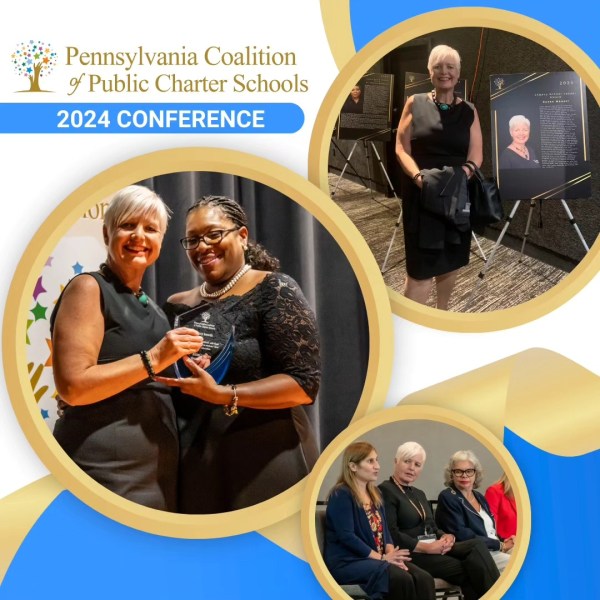
Celebrating Excellence in Leadership: CEO Susan Mauser Receives Legacy Leaders Award at PCPCS 2024

This past week, LVA’s very own CEO, Susan Mauser, was honored with the prestigious Legacy Leaders award at the Pennsylvania Coalition of Charter Schools (PCPCS) 2024 Conference. Held annually, this event gathers educators, administrators, and thought leaders from across the state to explore innovative strategies, share best practices, and engage in meaningful discussions about the future of charter schools in Pennsylvania.

The Legacy Leaders award recognizes individuals who have made a lasting impact on education and demonstrated an unwavering commitment to advancing charter schools. Susan Mauser’s dedication to fostering excellence at LVA has not only shaped the school’s success but has also contributed significantly to the broader charter school movement.

The PCPCS conference is a pivotal event, offering educators the opportunity to collaborate, learn, and grow together. With sessions designed to inspire and equip attendees with cutting-edge insights, it’s no wonder that the energy and passion surrounding charter school education continues to thrive. Attendees left with fresh ideas and renewed enthusiasm for transforming education.

We are incredibly fortunate to have such visionary leadership at LVA. Susan’s passion, dedication, and forward-thinking approach are helping shape the future of our students and educators. Her recognition with this award is a reflection of her relentless pursuit of educational excellence and her belief in the power of charter schools to create meaningful change.

Congratulations to Susan Mauser on this well-deserved honor!